
Need more space but don’t want the cost, disruption or timescales of a full traditional extension? There are several affordable house extensions and lower-cost alternatives that can help you make better use of the space you already have.
Garage conversions, lean-to extensions, loft conversions and conservatory upgrades can all give you extra living space without the cost of a large brick-built extension project.
The cheapest way to extend your home depends on your layout, budget and how you want the new space to improve your day-to-day living. For many homeowners, improving an existing conservatory turns out to be one of the most affordable ways to create extra usable living space, helping you make the most of what you already have without starting from scratch.
In this guide, we’ll walk you through some of the most affordable house extensions, explain how to afford a house extension on a tighter budget, share practical ways to keep costs down, and look at why a conservatory roof replacement is becoming a popular choice for homeowners who want a comfortable, usable space all year round.
Why traditional extensions can be expensive
For many homeowners, extending their property feels like a more realistic option than moving house. With rising house prices, mortgage costs and moving fees, more people are looking for ways to improve the space they already have rather than relocate.
A full home extension can completely transform a property, but it’s also one of the biggest home improvement projects you can take on.
Costs can quickly add up due to:
- Foundations and structural work
- Brickwork and roofing
- Planning permission and building regulations
- Plumbing and electrics
- Labour and materials
- Long installation times, often months on site
A typical UK house extension costs around £1,800 to £3,000 per square metre, with a 20m² single-storey extension averaging £40,000 to £56,000. Larger or more complex builds can exceed £100,000.
For homeowners looking for affordable house extensions, improving an existing part of the home can often be a far more practical and budget-friendly alternative. Converting a garage, upgrading an older conservatory or making better use of unused roof space can all help create extra living space without the cost and disruption of a full build.
The cheapest ways to extend your home
Garage conversions
A garage conversion turns your existing garage into a usable room, making it one of the most affordable ways to add living space to your home. Because the main structure is already there, you avoid much of the cost and disruption of building from scratch.
Popular uses include:
- A home office to work from comfortably
- A utility or laundry room to free up space elsewhere
- A playroom for the kids
- An extra bedroom for guests or a growing family
- A small living area or snug space
Costs are typically lower than a new extension because there’s far less structural work involved. That said, garage conversions don’t suit every home, especially if your garage is detached, very narrow, or you rely on it for parking and storage.
What it costs: Around £10,000 to £20,000 for a standard 16m² single garage, with the UK average sitting at roughly £14,500.
Planning permission: Most garage conversions don’t need planning permission as they fall under permitted development, though building regulations approval is required. Always check with your local council before starting work.
Lean-to extensions
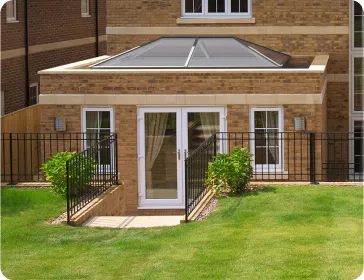
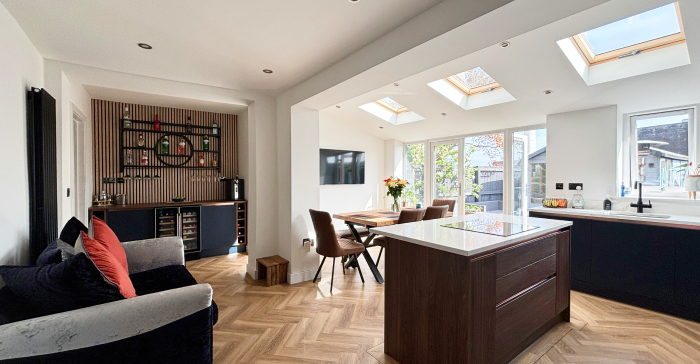
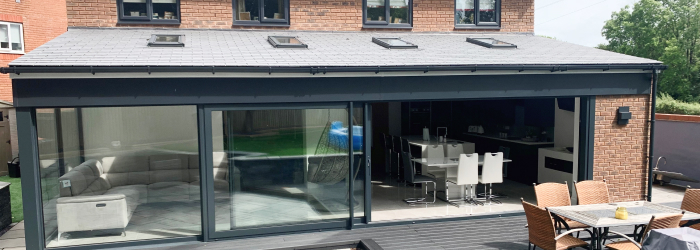
A lean-to extension is a single-storey home extension built against an existing external wall, typically featuring a sloped “lean-to” roof design. It’s a simpler, smaller-scale build, which is what makes it one of the more affordable house extensions if you only need a modest amount of extra room.
Lean-tos work well for:
- Extended kitchens that feel more open and sociable
- Dining areas with more natural light
- Utility rooms
- Garden rooms to enjoy the view
Because the design is relatively straightforward, lean-tos can often be completed at a lower cost than more complex extension projects. They still involve construction work, foundations and building regulations though, so the price can rise depending on the size and finish you choose.
What it costs: Around £1,200 to £1,900 per square metre, with most full lean-to extensions falling between £25,000 and £40,000 depending on size and finish.
Planning permission: Many lean-to extensions fall within permitted development rights if they stay within size limits (usually no more than 3m deep on a semi-detached or terraced property, or 4m on a detached property). Larger lean-tos will need full planning permission.
Loft conversions
A loft conversion transforms unused roof space into a functional room, giving you extra space upstairs without extending outwards into your garden. It’s a smart option if you want to add value to your home and avoid the upheaval of moving house.
A loft conversion is often cheaper than relocating, but the cost will depend on:
- Your existing roof structure
- Available head height
- Access and staircase requirements
- Insulation and windows
- Plumbing, if you’re adding a bathroom
Some loft conversions are fairly simple, while others need significant structural work. It’s always worth getting a clear quote before you commit so you know exactly what’s involved.
What it costs: Around £27,500 to £75,000, with the average at roughly £50,000 for a 30m² conversion. A simpler Velux-style conversion can start from £20,000 to £35,000.
Planning permission: Most loft conversions are covered by permitted development, but anything that significantly changes the shape of your roof (such as a large dormer) or extends beyond certain volume limits will need planning permission. Building regulations approval is always required.
Conservatories
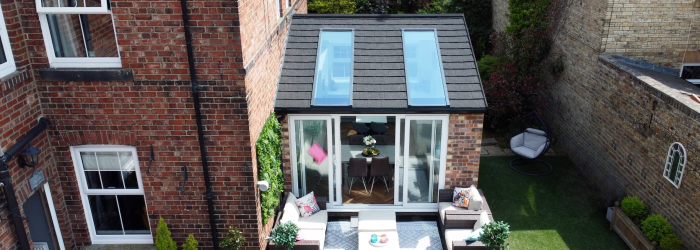
A conservatory is a mostly glazed room built onto your home, designed to bring in natural light and connect your indoor space with the garden. It’s often a more affordable way to add extra living space compared to a full brick-built extension.
A modern conservatory can give you:
- A dining area filled with natural light
- A relaxed family space
- A home office with garden views
- A peaceful spot to unwind
There is one common drawback though. Older conservatories with glass or polycarbonate roofs can become uncomfortably hot in summer and too cold in winter, which often means the room you spent good money on is not used as much as you hoped. That is where a modern conservatory roof replacement can make a real difference.
Planning permission: Most new conservatories fall under permitted development, providing they meet certain criteria such as covering less than 50% of the area around the original house and being built at the rear of the property. Larger or front-facing conservatories may need planning permission.
A conservatory roof replacement: a cost-effective alternative
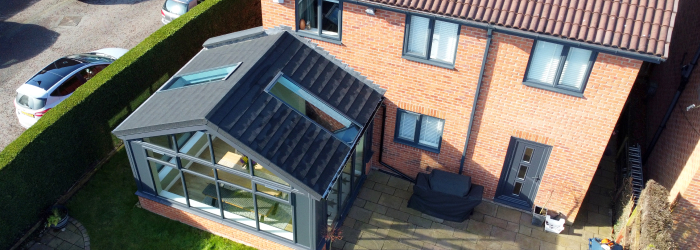
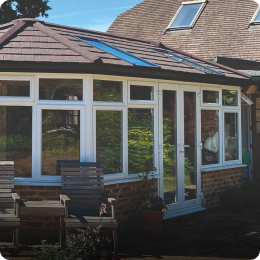
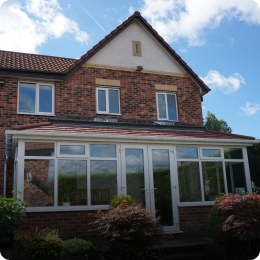
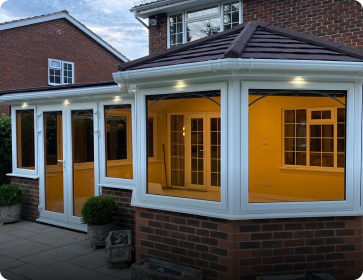
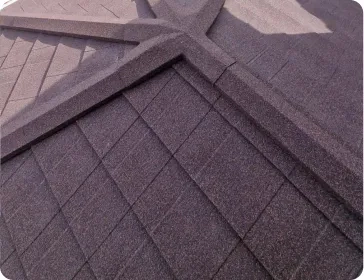
A conservatory roof replacement replaces your existing glass or polycarbonate roof with a solid, insulated tiled roof. It’s often a more affordable option than building a new extension, and it can completely change how you use the space day to day.
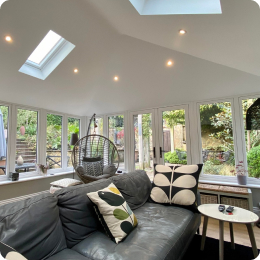
With a tiled roof system like those from SupaLite, your conservatory can be transformed into a comfortable, living space that feels more like a natural part of your home. You’ll notice the difference throughout the year, with better insulation in winter and cooler temperatures in summer.
A SupaLite tiled roof can:
- Keep your conservatory at a comfortable temperature all year round
- Turn your conservatory into a useable extra room, whether that’s a home office, guest bedroom or relaxing space
- Add value to your home by giving you a true functional living space
- Cut out the glare and noise from rain that older roofs often struggle with
- Be installed in as little as 4 days, with minimal disruption to your home
- Meet all building regulations for peace of mind
Because you’re not knocking anything down or starting from scratch, replacing your conservatory roof is often a more affordable way to gain the benefits of an extension, without the cost or disruption of a full build.
Planning permission: Most conservatory roof replacements don’t require planning permission, making them one of the simplest and quickest ways to upgrade your home. Building regulations approval is needed, but a SupaLite roof system meets all required standards.
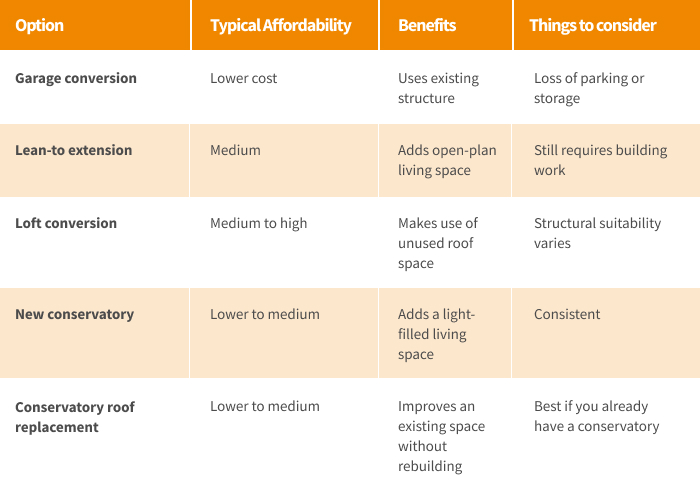
Cheapest home extension options compared
Every home is different, and the right option will depend on the space you need, how much disruption you’re comfortable with, and whether you already have areas like a garage, loft or conservatory that could be improved rather than replaced.
How to afford a house extension: tips to keep costs down

If you’re wondering how to afford a house extension on a tighter budget, it often comes down to being realistic about what you build and what you can improve within your existing home. Here are some practical ways to help keep costs under control.
Improve your existing space first
Before committing to a full extension, consider whether an unused or underused area of your home, such as a conservatory or garage, could be upgraded instead. Improving what you already have is usually more affordable than starting from scratch, and it’s often quicker too.
Keep the design simple
Simple layouts and standard materials can make a big difference to overall cost. The more complex the design, the more time, labour and materials are usually involved.
Plan your budget carefully
It’s important to allow for all the additional costs that come with a project, including:
- Building regulations and permissions
- Heating and electrics
- Flooring and decorating
- Furniture and finishing touches
Having a clear budget from the start helps you avoid unexpected costs later on.
Think about long-term value, not just upfront cost
The cheapest option isn’t always the best value over time. A space that’s comfortable, energy efficient and usable all year round will usually give you far better long-term value than something cheaper that doesn’t get used properly.
Is a conservatory roof replacement cheaper than an extension?
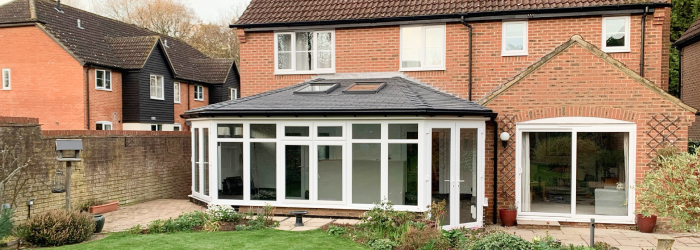
In many cases, yes. If you already have a conservatory, replacing the roof can often be one of the most affordable ways to create the extra space you’re looking for, without the cost of a full extension.
But it’s not just about saving money. It’s about turning a room you barely use into one you actually want to spend time in. Instead of avoiding it because it’s too hot in summer or too cold in winter, you can enjoy it all year round, whether that’s relaxing with a coffee in the morning, working from home, or having space for the kids to play.
It becomes a real part of your home rather than a separate room you only step into now and then. Somewhere comfortable to unwind, somewhere bright to work, somewhere the whole family can use whatever the weather.
And over time, you’re getting more from what you already have. Rather than extending outwards, you’re improving what’s there, creating a space that works harder for you day to day and adds long-term value to your home.
If you’re comparing your options, our full conservatory roof replacement cost guide covers pricing in more detail and explains what can influence the overall cost of a project.
Ready to make more of the space you already have?
If you already have an older conservatory with a polycarbonate or glass roof, replacing it with a SupaLite tiled roof can be a more affordable way to make better use of the space you already have.
With a SupaLite roof, your conservatory becomes a comfortable, usable space all year round, designed to feel like a natural extension of your home.
Get in touch with your local SupaLite installer for a free, no-obligation quote and see how a conservatory roof replacement could work for your home.
